Pavlova is the elegant, cloud-like dessert with a crisp, delicate meringue shell, a soft marshmallow center and a crown of whipped cream and fresh berries. It looks like a showstopper but needs only a handful of ingredients and a bit of patience. This easy pavlova recipe walks you through every step, from whipping the whites to avoiding cracks, so you get a gorgeous, gluten-free dessert that is perfect for Easter, spring and summer gatherings.
Pavlova is one of the most-searched desserts in the UK, ranking among the top three for Christmas dessert searches in one study, and it is beloved in Australia, New Zealand, Canada and the US too. The full ingredient list and instructions are in the recipe card below. This guide covers the science of meringue, how to get a crisp shell with a marshmallow center, how to prevent cracking and how to top and serve it.
Recipe at a Glance
Prep time: 25 minutes
Cook time: 1 hour 30 minutes (plus 1 hour cooling in the oven)
Total time: About 3 hours
Servings: 8
Category: Dessert
Why You’ll Love This Pavlova
- It has a delicate, crisp shell and a soft, marshmallowy center.
- It is naturally gluten-free and made with just a few ingredients.
- It looks stunning, especially topped with colorful fresh berries.
- The meringue can be made a day ahead, so you only need to top it before serving.
- It is light and fresh, which makes it a perfect finish to a rich meal.
The Story Behind Pavlova
Pavlova is named after the Russian ballerina Anna Pavlova, who toured Australia and New Zealand in the 1920s. Both countries claim to have invented the dessert, and the debate over its origins is a long-running friendly rivalry. What is clear is that the dessert has become a national treasure in both countries, especially at Christmas and summer gatherings.
Its light, airy appearance is said to have been inspired by the ballerina’s tutu. The dessert has since spread around the world and is popular across the UK, the US and Canada for celebrations of all kinds.
What Does Pavlova Taste Like?
Pavlova is sweet, light and creamy, with a crisp, melt-in-your-mouth shell and a soft, marshmallow-like center. The whipped cream is lightly sweetened and rich, and the tart berries or passion fruit cut through the sweetness for a balanced, refreshing finish. The texture contrast between crunchy, chewy and creamy is what makes it special.
Key Ingredients and Smart Substitutions
Egg whites and sugar are the backbone. Use room-temperature egg whites, which whip to greater volume, and make sure the bowl and whisk are completely clean and free of grease or yolk. Superfine (caster) sugar dissolves easily, giving a smooth, glossy meringue. If you cannot find it, blitz regular granulated sugar in a food processor for 30 seconds.
Cornstarch and white vinegar are the secret to the marshmallow center. They stabilize the meringue and help it stay soft inside while the outside crisps. Vanilla adds flavor. For the topping, whipped cream is classic, but you can use mascarpone, whipped coconut cream or Greek yogurt. Top with strawberries, raspberries, blueberries, kiwi, mango or passion fruit pulp.
How to Get a Crisp Shell and Marshmallow Center Without Cracks
The method starts with stiff, glossy peaks. Add the sugar gradually, a spoonful at a time, whipping continuously until the meringue is thick, shiny and no longer gritty when rubbed between your fingers. This ensures the sugar is fully dissolved, which prevents weeping and beading later.
Bake low and slow at 250°F (120°C), and then turn off the oven and let the pavlova cool completely inside with the door slightly ajar. This gradual cooling is the best way to prevent cracking. A few small cracks are normal and are covered by the cream. Do not top the pavlova until you are ready to serve, because the moisture from the cream and fruit will soften the shell.
Tips for the Best Pavlova
- Use a spotlessly clean, grease-free bowl and whisk.
- Add the sugar slowly and whip until the meringue is stiff and glossy.
- Draw a circle on the parchment and spread the meringue to the edge, with a slight hollow in the center for the cream.
- Cool the pavlova in the oven with the door ajar to prevent cracks.
- Top it just before serving so the shell stays crisp.
Common Mistakes to Avoid
- Getting even a trace of yolk or grease in the egg whites, which stops them from whipping.
- Adding the sugar too quickly, which makes a grainy, weepy meringue.
- Opening the oven door during baking, which can cause cracking and collapse.
- Topping the pavlova too early, which makes it soggy.
Variations to Try
- Make individual mini pavlovas and bake them for 45 to 50 minutes.
- Add cocoa powder to the meringue for a chocolate pavlova.
- Swirl raspberry puree through the meringue for a ripple effect.
- Top with lemon curd, whipped cream and blueberries for a lemon pavlova.
- Serve with passion fruit, mango and kiwi for a tropical twist.
How to Serve Pavlova
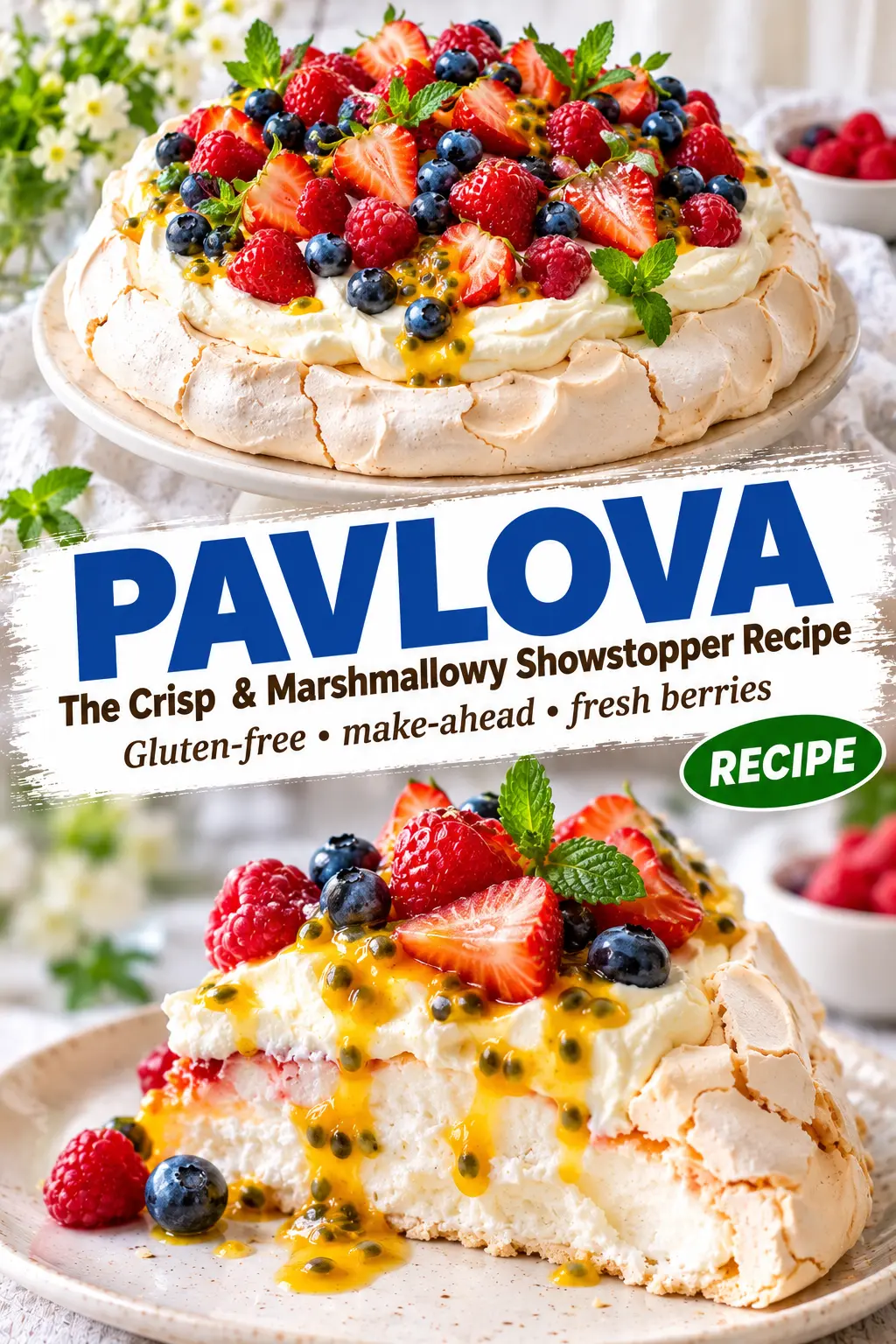
Place the cooled pavlova on a serving plate, pile on softly whipped cream and arrange the berries on top. Finish with mint leaves, passion fruit pulp or a dusting of powdered sugar. Serve with a sharp knife and a spoon, as the shell will shatter into crisp, creamy pieces.
How to Store It and Make It Ahead
The baked meringue shell can be made up to 2 days ahead and stored in an airtight container at room temperature, away from humidity. Do not refrigerate the shell, which makes it sticky. Assemble the pavlova with cream and fruit just before serving. Leftover assembled pavlova will soften but is still delicious, and keeps for a day in the fridge.
Frequently Asked Questions
Why did my pavlova crack?
Cracking is usually caused by a sudden temperature change. Cool the pavlova gradually in the turned-off oven with the door ajar. Small cracks are normal.
Why is my pavlova weeping or sticky?
The sugar may not have fully dissolved or humidity may be high. Add the sugar slowly, whip until glossy and store the shell in a dry place.
Can you make pavlova ahead of time?
Yes. Bake the shell up to 2 days ahead and store it airtight at room temperature, then top it just before serving.
Why is vinegar used in pavlova?
Vinegar and cornstarch help stabilize the meringue and create the soft marshmallow center.
Can I make pavlova without cornstarch?
You can, but the center will be less soft and marshmallowy. Cornstarch helps give the classic texture.
Pavlova
Ingredients
Equipment
Method
- Step 1: Heat the oven to 250°F (120°C). Line a baking sheet with parchment and draw a 9-inch (23 cm) circle on it, then flip the paper over.
- Step 2: Beat the egg whites, cream of tartar and salt on medium speed until soft peaks form.
- Tip: Make sure the bowl is completely clean and grease-free.
- Step 3: Add the sugar one spoonful at a time, beating well between additions. Continue beating for 8 to 10 minutes until the meringue is stiff, glossy and no longer gritty.
- Tip: Rub a bit between your fingers to check the sugar is dissolved.
- Step 4: Gently fold in the cornstarch, vinegar and vanilla.
- Step 5: Spread the meringue within the circle, building up the edges slightly and making a shallow hollow in the center.
- Step 6: Bake for 1 hour 15 minutes to 1 hour 30 minutes until the outside is dry and pale. Turn off the oven and let the pavlova cool inside with the door slightly ajar for at least 1 hour.
- Tip: Gradual cooling prevents cracks.
- Step 7: Whip the cream with the powdered sugar and vanilla to soft peaks.
- Step 8: Place the pavlova on a platter, pile on the cream and top with berries and passion fruit just before serving.
Notes
Cooling time is not included in the cook time. Add it in the Custom Time field if you want it to display.